
Encounter Is the Doorway, Not the Destination
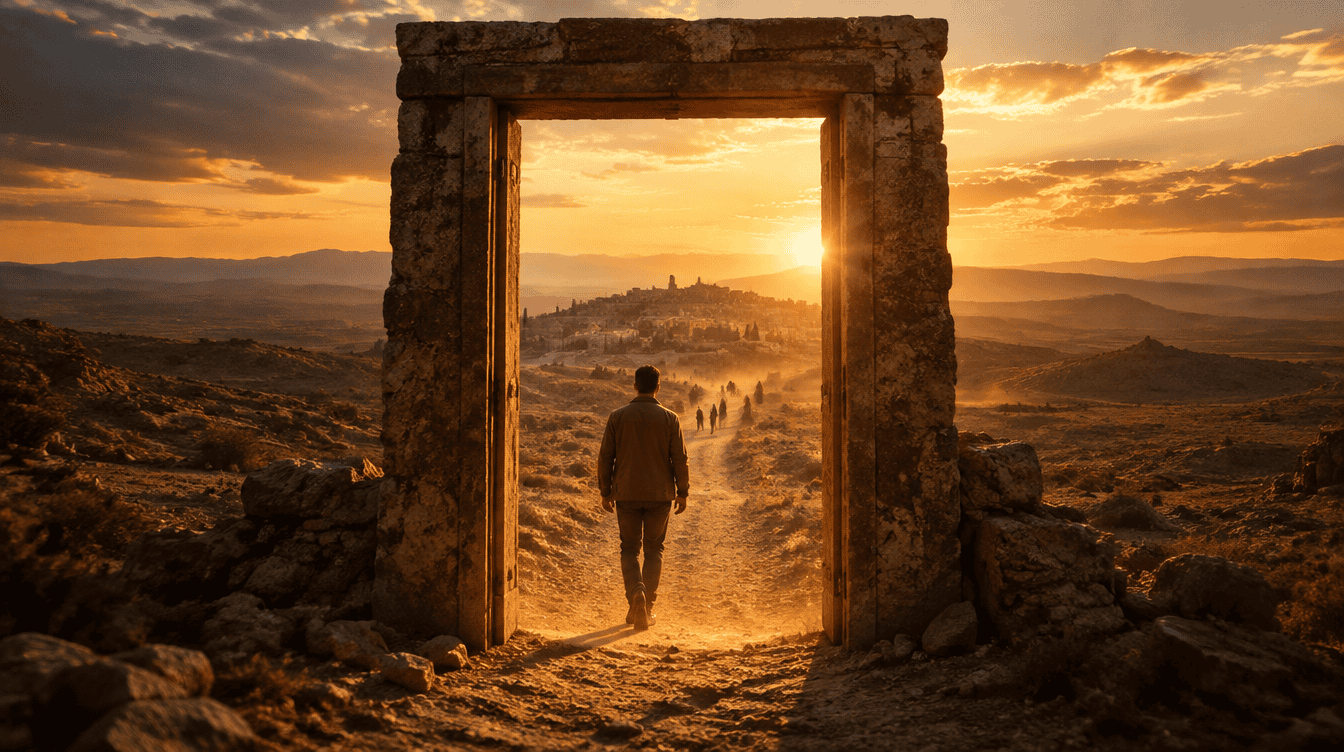
You can have a real encounter with God and still walk away unfulfilled. Not because the encounter was fake, but because you treated the doorway like the destination.
I meet these people everywhere I go. They’ve wept at the altar. They’ve felt the weight of His presence. They’ve had nights where heaven felt close enough to touch. And yet months later they’re asking the same question: Why don’t I feel fulfilled?
Here’s my answer, and it may sting a little: encounters are the beginning, not the end. God never meets you just so you can feel something. He meets you so He can form something in you. And what He forms in you was always meant to be given away.
Encounter leads to formation. Formation leads to others. That’s the pattern. Break the chain anywhere and you end up with a faith that feels thin no matter how many services you attend.
Every encounter in Scripture had a forward motion
Look at how God meets people in the Bible. Not one of those encounters ends with the person simply feeling better about themselves.
- Moses meets God in a burning bush, and the next words are about Egypt and a people in chains (Exodus 3).
- Isaiah sees the Lord high and lifted up, gets undone, gets cleansed, and then hears, “Whom shall I send?” (Isaiah 6).
- Saul gets knocked to the ground on the Damascus road, and within days God calls him a chosen vessel to carry His name to the nations (Acts 9).
- The disciples meet the risen Christ, and He breathes on them and says, “As the Father has sent me, even so I am sending you” (John 20:21).
Notice the sequence. Presence, then purging, then purpose. The encounter was real. It was holy. But it was never the finish line. It was the first step of a journey that always moved toward people.
We’ve built entire church cultures around the burning bush and forgotten about Egypt.
Formation is what God does after the goosebumps fade
M. Robert Mulholland Jr. gave us one of the clearest definitions I’ve ever read. In Invitation to a Journey, he describes spiritual formation as “a process of being conformed to the image of Christ for the sake of others.”
Read that slowly. Three things are packed into it.
- It’s a process. Not a moment. Not a single altar call. Formation is slow, daily, and often unglamorous. It happens in obedience, in Scripture, in prayer when you don’t feel anything, in community that sees your blind spots.
- It’s conformity to Christ. The goal isn’t a better version of you. It’s Christ formed in you (Galatians 4:19). Paul says we are being transformed into His image from one degree of glory to another (2 Corinthians 3:18). That’s not a weekend. That’s a lifetime.
- It’s for the sake of others. This is the part we keep cutting off. And it’s the part that answers the fulfillment question.
Encounter shows you who God is. Formation makes you look like Him. You can’t skip the second one and expect the first one to carry you.
We don’t need Christian Buddhism
I’m afraid too many believers have quietly removed “for the sake of others” from their definition of Biblical Christianity. What’s left is a spirituality of self-improvement. Personal peace. Personal growth. Personal breakthrough. My healing, my journey, my inner world.
I call it Christian Buddhism: an inward path toward enlightenment that happens to use Jesus’ name. It sounds spiritual. It feels deep. But it ends with you.
That is not the faith Jesus handed His disciples. His last words weren’t “go find yourselves.” They were “go and make disciples of all nations” (Matthew 28:19). Paul didn’t tell Timothy to keep what he’d received. He told him to entrust it to faithful men who would teach others also (2 Timothy 2:2). That’s four generations in one verse.
Here’s the uncomfortable truth: some of the emptiness you feel isn’t a lack of encounter. It’s a lack of outflow. A river that doesn’t flow becomes a swamp. You were never designed to be a reservoir. You were designed to be a riverbed.
Your transformation is real when it starts reproducing itself in someone else.
It’s not either/or. It’s both/and.
Some camps chase encounter and neglect formation. Others chase formation and get suspicious of encounter. And a lot of both camps forget the people outside the room.
The Kingdom doesn’t make you choose. Encounter, formation, and discipling others aren’t three competing ministries. They’re one movement.
- Encounter without formation produces emotional Christians. Big moments, shallow roots.
- Formation without encounter produces disciplined Christians with no fire. Right habits, no presence.
- Encounter and formation without others produces comfortable Christians. Deep, warm, and going nowhere.
Jesus modeled all three. He withdrew to lonely places to be with the Father. He formed twelve men over three years, up close and in real life. And He sent them out to do what He had done. Presence, process, people.
If you want fulfillment, stop asking for another encounter to fix what only obedience can fix. Let God form you. Then go find somebody to pour into.
Who are you pouring into?
Kingdom leader, here’s the question I’d leave with you: who is being formed because God formed you?
Not who follows you online. Not who claps when you post. Who are you actually walking with? Whose name could you write down right now as someone you’re intentionally pouring into?
If no name comes to mind, don’t spiral. Start this week. Invite one person to coffee. Open the Word with them. Pray with them. Tell them what God has been teaching you. Formation multiplies the moment you give it away.
The encounter got you started. The formation is shaping you. The others are the reason.
Mark Casto